
The Mess Is the Message: Exploring Imperfection as Differentiation
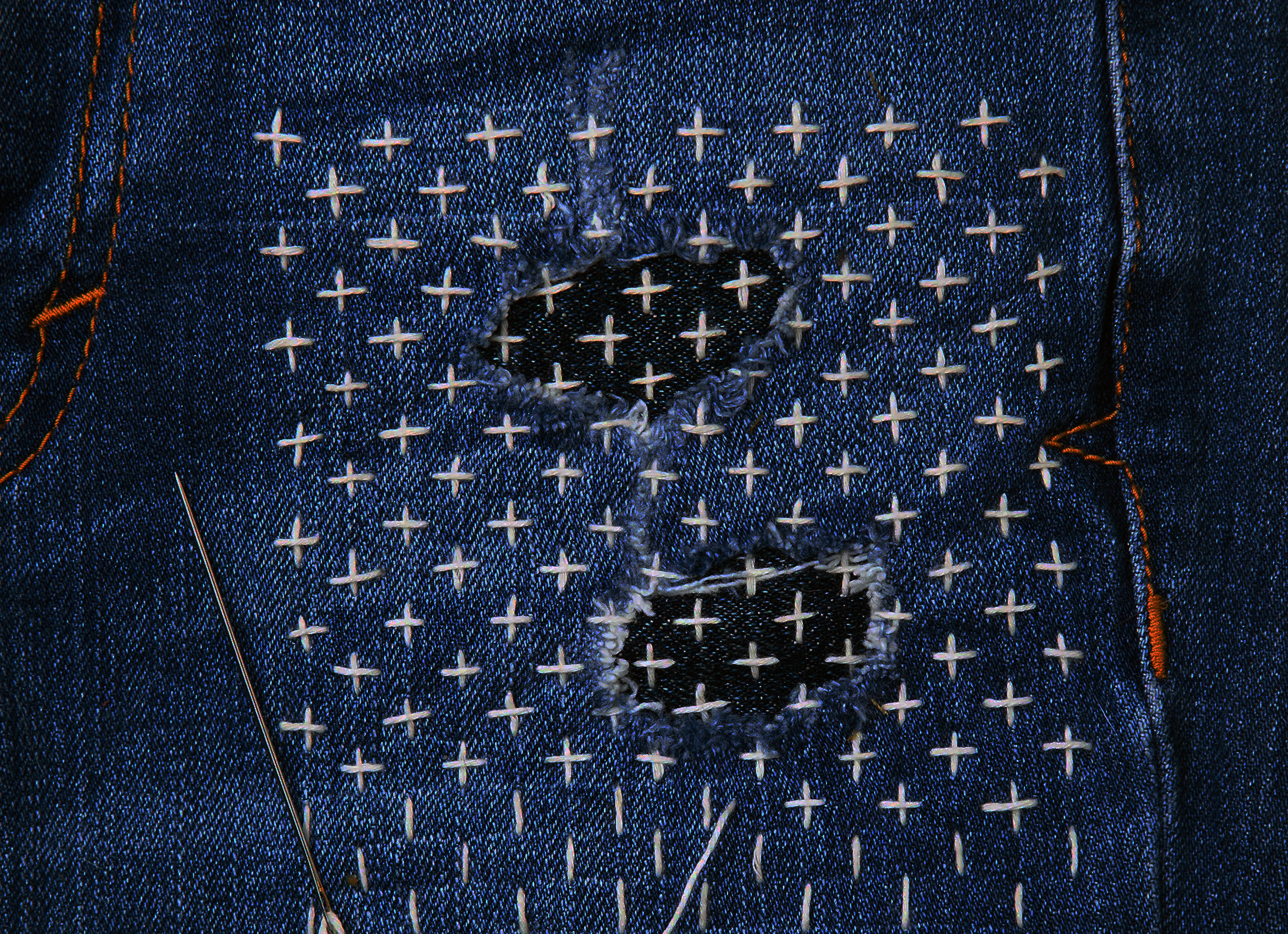
Don’t get me wrong: technology is great.
It has extended our lives - the average life expectancy throughout human history was 30-35; it now exceeds 73 years worldwide. Vaccines, antibiotics, sanitation, and surgical advances have limited or controlled diseases that killed billions - smallpox alone killed approximately 300 million people in the 20th Century before being eradicated in the 1980s. Child mortality has dropped. Mass starvation at scale has been partially rectified. Inventions from the printing press to the Internet have compressed distance, connected minds, and democratized information. Finally, it has liberated human labor and redefined its meaning - 2% of the U.S. population feeds the entire country and still produces exports.
These advances have freed society from survival labor and redirected efforts into art, science, culture, philosophy, and leisure - the very activities that define “civilization.” Still, with that comes the amplification of human vice, radicalization through democratized information, and surveillance states that leverage technology for the purposes of oppression. Every major advance that industrializes human expression (as separate from physical labor) generates a cultural demand for what technology cannot replicate. Technology helps illuminate the irreducible value of what it cannot produce autonomously. (This is not the first time I have explored the value of imperfection.)
In a media landscape that can create photorealism with sharply limited cost and effort, flawlessness has lost its appeal. Imperfection, roughness, and idiosyncrasy are now sophisticated brand signals. Those brands that embrace what it means to be human are those that will outperform competitors pursuing exquisite artifice. Perfection is now noise. AI homogenizes output and leaves us adrift in a sea of sameness. The Uncanny Valley is now a battlefield where perfection triggers discomfort rather than admiration.
Low-key, Lo-fi
As civilization is driven deeper into the Fourth Industrial Revolution, we would be wise to recognize the trade-offs that were made during previous Revolutions. A.I. will destroy some jobs but, historically, transformative technologies drive the identification of new roles, new approaches, and new capabilities. The Industrial Revolution of the late 18th century sparked the cultural movement of Romanticism. Mass media - born of the Third (or Digital) Industrial Revolution - contributed to the rise of punk rock via anti-competence. Social media’s curation algorithms - something that drives homogeneity and serendipity - produce lo-fi aesthetics. These new aesthetics can be a deliberate strategy, not something driven by budgetary shortfall.
Lo-fi - short for low fidelity - aesthetics are an audio-visual response to technology that centers on deliberateness of imperfection. Originally an audio term that indicated recordings where tape hiss, room sound, and clipping were present (and desirable), lo-fi continued the argument made by punk and grunge: the perfect is corporate, impersonal, and devoid of passion. It is the imperfections that signal authenticity.
Lo-fi aesthetics have proven strategically valuable because artificial intelligence generates the opposite: hyper polished, technically flawless, and compositionally “perfect” outputs. As the value of perfection wanes, imperfection waxes. Imperfection can now signify the inherent humanity that underlies design choices. It can say “a real person made this” in a way that artifacts’ perfection cannot. Lo-fi carries an ideological signal - the same one punk carried in the late 1970s - that says that a flawless illusion cannot be trusted. Audiences are capable of distinguishing between the real and the manufactured, thereby demonstrating an awareness of the difference between authentic roughness and performative roughness.
Ursine of the Times
The “lo-fi girl” YouTube phenomenon became one of the most-watched livestreams in YouTube history in part because its unhurried, imperfect, analog warmth approximates a human atmosphere in a digital space. That’s the true core of the aesthetic: output looks the way it does because something true and human happened. Real-time relevance wins over refinement. Gen Z prefers rawness and imperfection over polish. In 2026, authenticity will surpass wealth, fame, and independence as a personal value. 87% of Gen Z would prefer to be perceived as “authentic" rather than “cool.” Perfection fatigue is actually a real thing.
Similarly, there is a new authenticity imperative that must drive contemporary marketing. Authenticity isn’t new - it’s a cyclical cultural correction that exists in reaction to industrialization, corporatization, and media saturation. The significance of this cultural moment is that, when the manufactured overwhelms the felt, culture pivots to the raw. AI-generated content flooded our feeds over the past few years and produced a documented customer backlash. High-profile failures include Coca-Cola’s glitchy Christmas trucks and McDonald’s AI slop holiday ad. Coke actually drove dual backlash when they leveraged AI to create their seasonal polar bear ads in the same holiday season.
All of this to say that, collectively, humans appear to be reinforcing the notion that human content means something that machine content does not. Academic research confirms that the reaction is a moral one. Consumers don’t just dislike AI content, they are disgusted by it in emotionally resonant contexts. This “AI-authorship effect” can measurably reduce brand loyalty and compromise word of mouth. Jean Paul Sartre’s conception of authenticity - humans acting in accordance with their own freely chosen values rather than performing roles defined by others (i.e., acting in “bad faith”) - remains the best philosophical framework for understanding the concept in the wild. When consumers learn that brands are leveraging AI slop, they are identifying an organization operating in bad faith; the brand performs the relationship as it outsources the emotional labor to the machine.
Keeping It Real
What can brands do to operate successfully alongside this pro-authenticity movement? First, stop inventing rationalizations - 82% of ad execs believe consumers feel positive about AI ads, yet only 45% of consumers agree. Take these steps instead:
Clarify and operationalize your values: Ruthlessly audit your organizational values. Define 3-5 non-negotiable principles that will actually govern decisions. Align internal incentives according to those same principles. For each core value, define binary “always/never” protocols. Couple that with codified rules as to when not to use AI. Finally, hire and promote with congruence to those values.
Practice radical transparency: Publicly disclose how you make money, how you use AI, how your supply chain operates, and where you fall short. When something goes awry, own it rapidly and publicly.
Shift from manufactured polish to real human stories: Prioritize founder, employee, and customer stories over generic voice-and-tone guidelines. Use lo-fi, behind-the-scenes, and process content to show how things are made - whether a product or a decision. Show, don’t tell.
Put user-generated content (UGC) at the center: Treat UGC as primary creative, rather than just filler, because shoppers are more likely to see UGC as authentic rather than brand content. 84% of those consumers trust a brand more when it leverages user-generated content. Brands must actively enable UGC, not simply rely on it. This can be done by offering intuitive tools that simplify the process of contributing. Authenticity isn’t just captured - it’s facilitated.
Make consistency and verification visible: Ensure brand consistency - narrative, tone, promises, behavior, etc. Showcase trust with verified profiles, accurate contact details, and third-party reviews. Regularly audit for “authenticity drift.”
By making these changes - which I recognize are not simple - companies can begin to offer the human process as the product, elevate the stories of real people over models, and the mistake as content. Transparent failure can produce brand humanization. Be careful that your organization doesn’t exhibit performative imperfection. In other words, the authenticity must be structural, not solely stylistic. Design content processes that produce genuine imperfection rather than simulated imperfection.
The Gold Standard
Imperfection has always been a shadow standard by which we recognize the truth of a thing. When machines can generate infinite, frictionless polish, brands that successfully endure must stake their reputation on something far messier: the vulnerability of showing how the work is done, who is doing the work and how, and where the work falls short. Authenticity is not fuzzy, namby-pamby bullshit. It reflects hard-edged strategic choices about incentives, disclosure, and process. Organizations that merely adopt the surface treatment of lo-fi human messiness will be exposed as charlatans. Those that, instead, reimagine their values as ones that govern decisions, drive reflexive transparency, and offer real people narrative control will do more than succeed in an era of AI-slop - they will define the evolution of the brand itself. That brand will live in a new world where perfection is not the gold standard. It is unmistakable evidence that a human cared enough to leave their fingerprints on the work.
SOURCES
“Life Expectancy of the World Population;” Worldometers.info
“The Triumph of Science: The Incredible Story of Smallpox Eradication;” National Foundation for Infectious Diseases; May 1980
“Progress in reducing child deaths slows as 4.9 million children die before age five;” World Health Organization; March 2026
“The blind spots in famine metrics: When statistics delay humanitarian action” by dr. IJJ (Ingrid) de Zwarte; Wageningen University & Research; February 2026
“Thanks to the 2%, the farmers and ranchers” by Andrew McGuire; Center for Sustaining Agriculture and Natural Resources; November 2015
“Alexa, Pardon Me: The Tension Between Anthropomorphization and Subservience in MI“ by Ross A McIntyre; Hypergiant Medium; 2017
“Uncanny valley” definition; Mirriam-Webster
“Past imperfect: The art of lo-fi design” by Mesh Flinders; Ceros
“Lofi Girl” by @Lofigirl; YouTube.com
“Generation Z Authenticity: How Brands Can Really Show Up” by SlateTeam; Slateteams.com; February 2026
“‘Love Song’ explores the 2024 mindset of Gen Z: the world’s largest and most surprising generation yet;” Connect By Live Nation; June 2024
“2026 IS THE NEW 2016: WHY GEN Z IS DITCHING DIGITAL PERFECTION FOR RAW AUTHENTICITY” by Luke M. Williams; Universal Student Living; February 2026
“This year's Coca-Cola holiday ad exposes one of the biggest problems with AI-generated video” by Lara O’Reilly; Business Insider; November 2025
“Not lovin' it: McDonald's pulls AI-generated Christmas ad after social media backlash” by Elmira Aliieva; NBC News; December 2025
“The Polar Bears Aren’t Real—But Coca-Cola’s AI Ads Prove Why Nostalgia Has To Be” by Stephanie Gravalese; Forbes; December 2025
“The AI-authorship effect: Understanding authenticity, moral disgust, and consumer responses to AI-generated marketing communications” by Colleen P. Kirk, Julian Givi; Journal of Business Research, Article 114984, Vol. 186; January 2025
“Authenticity,” Stanford Encyclopedia of Philosophy; February 2020
“Facing ‘AI slop’ and a trust problem, AI platforms invest in Super Bowl-level brand ads” by Kimiko McCoy; Digiday; January 2026
“Audiences overwhelmingly prefer user-generated content over standard ads, AI” by Marisa Jones; eMarketer; January 2026
“25 User-Generated Content (UGC) Engagement Statistics: Essential Data for Modern Brands in 2026;” Archive.com; January 2026
“Semantic Fidelity: Why Everything Is Aligned but Nothing Feels Real” by A. Jacobs; Reality Drift Archive; May 2025
“Namby pamby” definition; Mirriam-Webster
